
NASA Launches 2026 Lunabotics Challenge, Advancing U.S. Engineering Innovation
By Renee Baptiste |
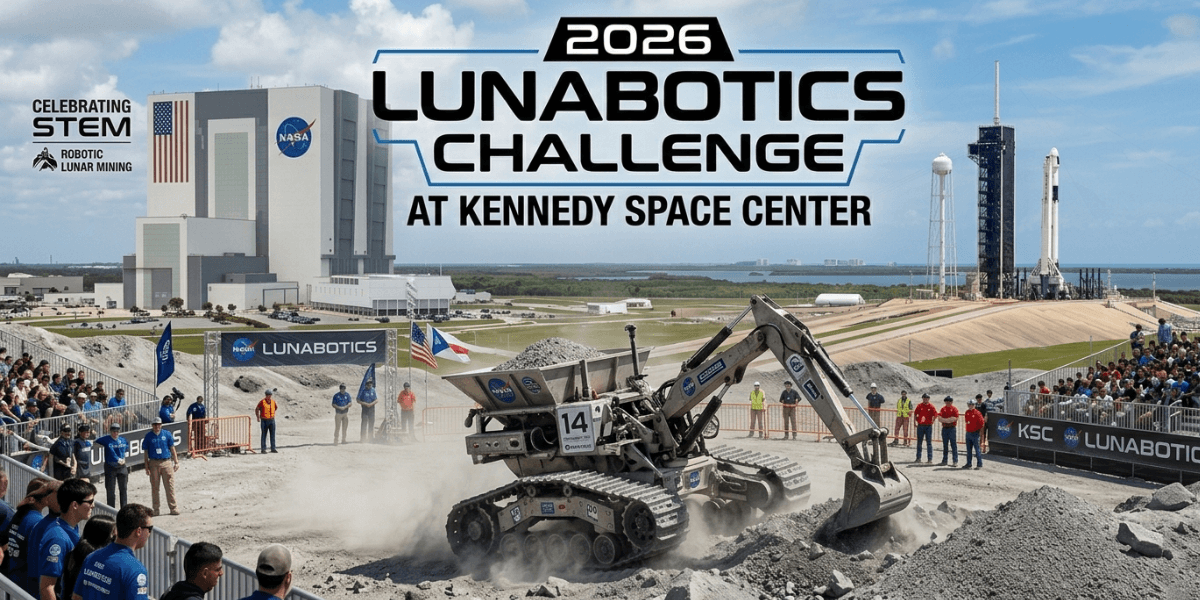
A major U.S. event on May 19, 2026, came from the nation’s science and technology sector as NASA officially opened its 2026 Lunabotics Challenge at Kennedy Space Center Visitor Complex. The annual competition gathers university teams from across the country to design and operate robotic systems capable of performing simulated construction and excavation work on the Moon. While it may appear to be a student engineering event, the challenge plays a practical role in supporting the long-term future of American lunar exploration.
The Lunabotics Challenge focuses on robotic excavation, a key requirement for future Moon missions. Participating teams build machines designed to navigate a simulated lunar environment and move regolith, the dusty surface material that covers the Moon. NASA has identified robotic excavation as essential to building sustainable infrastructure for future missions, especially as the agency prepares for extended human activity beyond Earth. The challenge offers students the opportunity to tackle engineering problems similar to those faced by NASA researchers and aerospace contractors working on real exploration systems.
This year’s competition opened with teams arriving at Kennedy Space Center after months of preparation, testing, and engineering development. Universities from multiple states brought custom-built robotic systems that must complete tasks under realistic operational conditions. These include communication limitations, remote operation, and autonomous decision-making. Such conditions mirror the challenges expected in lunar environments, where delays in communication and harsh terrain make traditional machine operation more difficult.
The event is significant because it goes beyond an academic contest. NASA uses Lunabotics to encourage innovation in robotics, systems engineering, and automated construction technologies. The competition serves as a training ground where students can gain direct experience in solving real-world aerospace problems. Mechanical engineering, software development, electrical systems, and remote control design all come together in the challenge, requiring participants to work as integrated project teams. That experience mirrors the interdisciplinary work required in the U.S. aerospace sector.
The timing of the event is important as well. NASA and the broader U.S. space industry are increasing investments in workforce development as lunar missions become a greater focus. Government agencies and private companies are expected to need more engineers specializing in robotics, autonomous systems, and advanced manufacturing. Competitions like Lunabotics help build that workforce by giving students practical exposure before they enter the industry. It allows universities to directly contribute to national science and technology goals while helping students develop specialized technical skills.
The challenge also reflects broader economic trends. The American space sector has become a major source of innovation, employment, and investment. Beyond launches and spacecraft manufacturing, the industry relies on a growing network of research institutions, universities, and commercial suppliers. Educational programs like Lunabotics support this ecosystem by developing future professionals who may work in aerospace companies, robotics firms, or federal research agencies. In this way, the event has relevance far beyond the competition itself.
Another key takeaway is the role of robotics in future space exploration. Human missions to the Moon will depend heavily on machines that can perform groundwork before astronauts arrive. Excavation robots may eventually be used to prepare landing zones, collect construction materials, or assist with building habitats. By encouraging students to design systems for these purposes now, NASA creates an environment where new ideas can emerge from the academic community. Some concepts developed in competitions like this may influence future mission planning or engineering solutions.
The event also demonstrates how national progress in science often depends on education. As global investment in robotics and automation increases, countries are competing not only in technology development but also in talent preparation. The United States continues to use programs like Lunabotics to strengthen its technical workforce and encourage innovation among younger engineers. This is especially relevant as international interest in lunar exploration grows and multiple countries prepare new Moon missions.
For readers, the significance of the May 19 opening lies in its long-term impact. The Lunabotics Challenge is more than a student event; it is part of the infrastructure supporting future U.S. exploration, engineering advancement, and economic growth. It highlights how major developments can happen through educational and scientific initiatives that may not dominate headlines but still shape the country’s future.
As the competition continues through the week, its broader message is clear. The future of lunar exploration will not depend solely on rockets or astronauts. It will also depend on engineers, robotics systems, and practical innovations being developed today. Through the 2026 Lunabotics Challenge, NASA is helping ensure those future capabilities are already taking shape in classrooms, laboratories, and testing grounds across the United States.

PrimeTime Press Contributor
Renee Baptiste
Covers health, technology, and entertainment, and how each shapes the way audiences live and spend their time.
This article features partner, contributor, or branded content from a third party. Members of the PrimeTime Press editorial staff were not involved in the creation of this content. All views and opinions are those of the contributor alone.