
Meteor Explosion Over Northeastern United States Shakes Communities With Sonic Boom
By Dominic Chase |
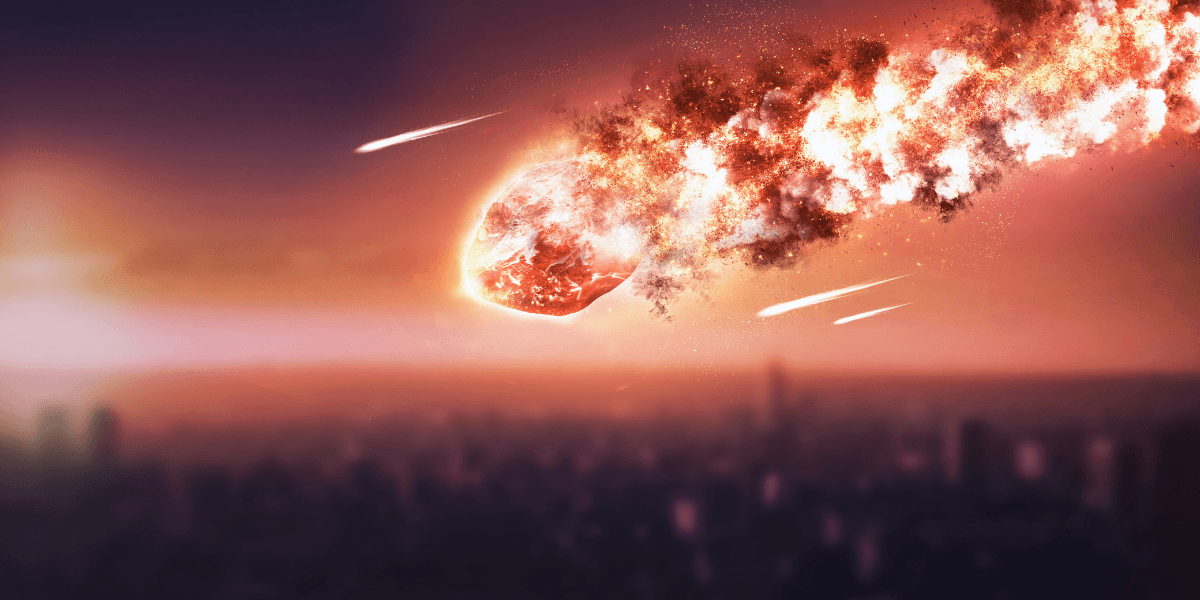
A bright meteor streaking across the sky over the northeastern United States produced a powerful atmospheric explosion that startled residents across multiple states, briefly rattling buildings and generating a wave of emergency calls. The event occurred in the afternoon and was visible across a wide region, including parts of Massachusetts, New Hampshire, and neighboring areas. Witnesses described a sudden flash followed by a loud sonic boom that many initially mistook for an aircraft incident, industrial blast, or even an earthquake. Despite the dramatic nature of the phenomenon, authorities quickly confirmed that there was no associated damage or injuries, and that the event was natural in origin.
Preliminary scientific assessments indicated that the object was a small asteroid fragment that entered Earth’s atmosphere at extreme velocity, generating intense heat and pressure as it descended. As it traveled through the upper atmosphere, the object rapidly disintegrated, producing a bright fireball commonly referred to as a bolide. The resulting airburst released energy equivalent to several hundred tons of TNT, enough to generate a shockwave that traveled through the atmosphere and reached the ground as a sonic boom and mild tremor in certain areas. Sensitive monitoring equipment, including seismic sensors and weather satellites, detected the disturbance and helped researchers reconstruct the object’s trajectory and energy output shortly after the event.
Residents across the region reported a sudden, thunder-like blast that caused windows to shake and doors to rattle, prompting confusion and concern. Many initially believed the sound was linked to a structural explosion or an aircraft breaking the sound barrier at low altitude. Emergency call centers in several states experienced a temporary surge in reports as people sought confirmation of what they had witnessed. Social media quickly amplified the event, with videos and descriptions spreading rapidly as residents shared accounts of the bright streak and subsequent shockwave. Despite the alarm, officials reassured the public within a short time that no emergency threat existed and that no injuries or damage had been reported. Local agencies coordinated with federal scientific bodies to verify the cause of the phenomenon.
Experts emphasized that atmospheric explosions of this type, while rare, are not unprecedented and are typically caused by relatively small near-Earth objects that burn up before reaching the surface. Such events are valuable to researchers because they provide real-time data on how space debris interacts with Earth’s atmosphere, including fragmentation patterns, energy release, and shockwave propagation. Observations collected from satellites, ground sensors, and eyewitness reports allow scientists to refine predictive models for tracking meteors and assessing potential risks from larger objects. Although most meteoroids entering the atmosphere pose no danger, the study of airbursts contributes to ongoing planetary defense efforts aimed at improving early detection systems and impact risk assessment capabilities.
The incident also underscores the importance of continuous global monitoring of near-Earth objects, which are tracked by observatories and space agencies to identify any potential threats well in advance. While this particular event posed no danger to populated areas, it demonstrates how even relatively small space objects can produce significant atmospheric effects when they enter at high speed. Public awareness of such phenomena has increased in recent years due to improved detection technology and widespread sharing of real-time observations. Scientists expect continued improvements in detection networks, which may allow for even more precise tracking of incoming objects and faster analysis of atmospheric events.
For residents who witnessed the bright flash and heard the resulting boom, the event served as a striking reminder of the dynamic nature of Earth’s relationship with its surrounding space environment. Though brief, the phenomenon left a lasting impression across communities that experienced it, combining elements of surprise, curiosity, and concern before scientific clarification emerged. As analysis continues, the data gathered will contribute to broader understanding of atmospheric physics and space object behavior, reinforcing the value of scientific monitoring systems in documenting rare but impactful natural events.
Events such as this also tend to highlight the role of public alert systems and scientific communication in rapidly distinguishing natural phenomena from potential emergencies. In this case, coordination between monitoring agencies and local authorities helped reduce uncertainty and prevent misinformation from spreading widely. As observational technology continues to improve, similar events are expected to be identified and explained more quickly in the future, strengthening public confidence in scientific reporting and emergency response systems.

PrimeTime Press Contributor
Dominic Chase
Covers breaking news and sport, following stories as they develop and the people at the centre of them.
This article features partner, contributor, or branded content from a third party. Members of the PrimeTime Press editorial staff were not involved in the creation of this content. All views and opinions are those of the contributor alone.
Previous Post
Jason Butcher Builds An Ecosystem For Founders