
How F.L.A.S.H.© Profiling Is Redefining Human Understanding in Real Time
By Renee Baptiste |

A next-generation framework blends insights from legacy models without questionnaires, enabling faster understanding of how people think, decide, and interact.
Most human difficulty does not come from a lack of intelligence, ability, or intention. It comes from something quieter: moments where what was meant is not what was heard. A tone lands slightly wrong, a pause is interpreted too quickly, a reaction is given meaning it was never meant to carry. A leader sees hesitation and assumes resistance. A recruiter hears confidence and expects performance. A manager reads silence as disengagement.
And then, outside of work, the same pattern plays out differently. “You’re quiet,” one person says. “I’m just tired,” the other replies. “That’s not what it feels like.” Nothing escalates, but something shifts. One feels unseen, the other misunderstood. The moment passes, but the interpretation stays, and over time those moments layer into tension, distance, and conversations that feel heavier than they should.
This is where F.L.A.S.H.© Profiling changes the conversation. It is not simply a framework to describe people, but a real-time system for understanding behavior as it unfolds across leadership, hiring, coaching, and the places where misreading carries the most weight: families and close relationships. When understanding happens closer to the moment itself, communication becomes clearer, decisions settle faster, and relationships stop carrying meaning that was never intended.
A Unified Problem: Misreading Across Work and Life
For decades, organizations and individuals have relied on personality frameworks and behavioral models to understand human difference. These models have provided language and structure, helping people reflect and navigate complexity. But they depend on how people describe themselves, and that description is rarely stable.
In an interview, it becomes performance. In leadership, it reinforces identity. In relationships, it filters emotion. People answer as they believe they are, as they want to be seen, or as they think they should be. The result is subtle but consistent misalignment. A candidate appears ideal but struggles under pressure. A team member is labeled difficult when they are overloaded. A partner says “I’m fine,” while something unresolved lingers underneath.
Nothing is obviously wrong, yet something feels slightly off. That gap follows people between environments, shaping how they are understood at work and at home.
From Description to Observation
[IMAGE: https://bizweekly.com/wp-content/uploads/2026/04/download-1-54.jpg]
F.L.A.S.H.© Profiling shifts the focus away from self-description and toward observable behavior. It looks at how information is processed, how decisions take shape under pressure, how communication shifts with emotion, and how people move in and out of connection depending on context.
This matters because people are not fixed types. Someone can be decisive in one moment and hesitant in another, open in one setting and guarded in the next. What creates tension is not the variation, but how quickly meaning is assigned to it. A pause becomes doubt. Distance becomes rejection. The reaction follows the assumption, not the reality.
Where Misreading Becomes Personal
In business, these moments create inefficiency. At home, they carry emotional weight. “Why are you talking to me like that?” “I’m not.” “You are.” “I’m just asking a question.” The conversation shifts within seconds, not because of what was said, but because of how it was heard.
Or it happens more quietly. One person stops mid-conversation. The other waits, then pushes. “Say something.” “I don’t know what to say.” “So you’re shutting down.” “I’m not.” But now they are. What started as a pause becomes a pattern.
Over time, these moments accumulate. One becomes “the one who withdraws,” the other “the one who pushes.” A child becomes “difficult.” A parent becomes “too much.” The labels stay, even when the behavior that created them was situational.
F.L.A.S.H.© Profiling does not remove these moments, but it changes how they are read while they are happening, before they harden into identity.
Leadership and Intimacy Run on the Same Mechanism
In leadership, interpretation happens under pressure. A leader must decide quickly whether hesitation signals resistance or careful thinking, whether disagreement reflects misalignment or engagement, and whether silence indicates disengagement or overload. The accuracy of those judgments shapes outcomes.
At home, the same mechanism operates without distance. A parent sees a child shut down and feels disrespected. A partner senses distance and feels rejected. A small shift in tone becomes the start of a larger story. The reaction comes quickly, often faster than understanding.
What escalates is not just behavior, but the meaning attached to it. F.L.A.S.H.© Profiling introduces clarity into that moment, slowing the jump from observation to conclusion just enough to change the response.
Recruitment and Relationships: Different Contexts, Same Blind Spot
Recruitment decisions are often based on how someone presents. Confidence and clarity are taken as indicators of capability, yet these signals do not always hold under pressure or ambiguity. In relationships, the signals are emotional. A delayed response feels like distance. A short answer feels like irritation. A need for space feels like withdrawal.
“Are you upset with me?” “No.” “Then why does it feel like something’s off?” From the inside, each person feels clear. From the outside, each is being interpreted. The disconnect sits between intention and perception.
F.L.A.S.H.© Profiling focuses on that space, where behavior is visible but not yet fully understood.
Coaching Without the Delay
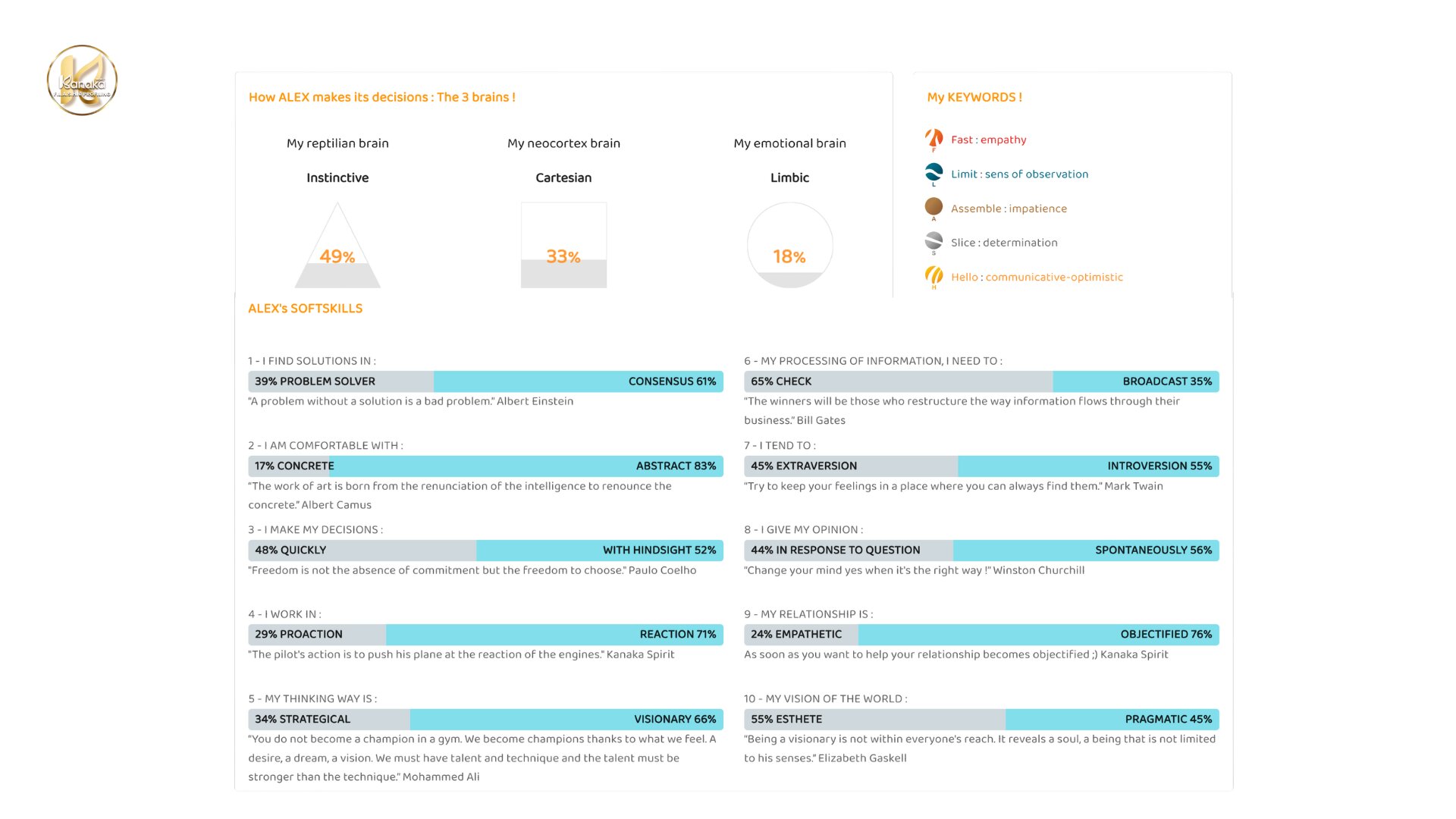
Coaching has traditionally helped people recognize patterns over time, often by revisiting situations after they unfold. While this remains valuable, many patterns are already visible in real-time behavior. The hesitation, the reaction, the shift in tone are all present in the moment.
F.L.A.S.H.© Profiling shortens the distance between experience and recognition. In leadership, this can prevent misaligned decisions. In relationships, it can interrupt familiar cycles before they repeat. The insight remains just as deep, but it arrives sooner.
Why It Matters Most at Home
In professional environments, misinterpretation creates friction. At home, it creates meaning. A message left unanswered becomes “I’m not important.” A change in tone becomes “Something is wrong.” A need for space becomes “You’re pulling away.”
“Forget it.” “No, tell me.” “It doesn’t matter.” But it does, and it lingers.
When meaning is assigned too quickly, even small moments carry disproportionate weight. Over time, this builds into distance, defensiveness, and conversations that feel harder than they should be.
F.L.A.S.H.© Profiling does not remove emotion, but it reduces the number of moments where the wrong meaning is assigned too quickly. When that shifts, reactions become more proportionate, conversations soften, and patterns begin to loosen.
A Framework for a Faster World
Life moves quickly, and understanding has to keep pace. Decisions are made in motion, conversations unfold without pause, and reactions happen in real time. In this environment, delayed understanding has limited impact.
F.L.A.S.H.© Profiling is designed to meet behavior where it happens. It does not categorize people into fixed types, but reads patterns as they emerge within context. Leadership, hiring, coaching, parenting, partnership, and conflict are not separate challenges, but variations of the same task: understanding people accurately while interaction is still unfolding.
The Cost We Don’t See
What shapes outcomes in both work and life is rarely the obvious moment of conflict, but the accumulation of smaller ones that pass without being fully understood. A pause, a glance, a sentence that lands slightly off. Interpretation forms instantly, reaction follows, and meaning stays.
That is the hidden cost.
F.L.A.S.H.© Profiling addresses that layer by making behavior clearer at the moment it is most often misread. Most people are not difficult; they are responding in ways that make sense to them in context. The problem is not the behavior itself, but what is assumed about it.
When that assumption becomes more accurate, communication becomes clearer, decisions more grounded, and relationships less reactive—not because people change faster, but because they are finally seen more clearly as they are functioning.
Discover the technology at KANAKA F.L.A.S.H.© Profiling, explore the platform at Kanaka World, connect on LinkedIn, follow on Facebook, and book a Complimentary F.L.A.S.H.© Session to experience instant behavioral clarity for yourself.

PrimeTime Press Contributor
Renee Baptiste
Covers health, technology, and entertainment, and how each shapes the way audiences live and spend their time.
This article features partner, contributor, or branded content from a third party. Members of the PrimeTime Press editorial staff were not involved in the creation of this content. All views and opinions are those of the contributor alone.
Previous Post
Mitolux Reimagines How We Think About Light At Home