
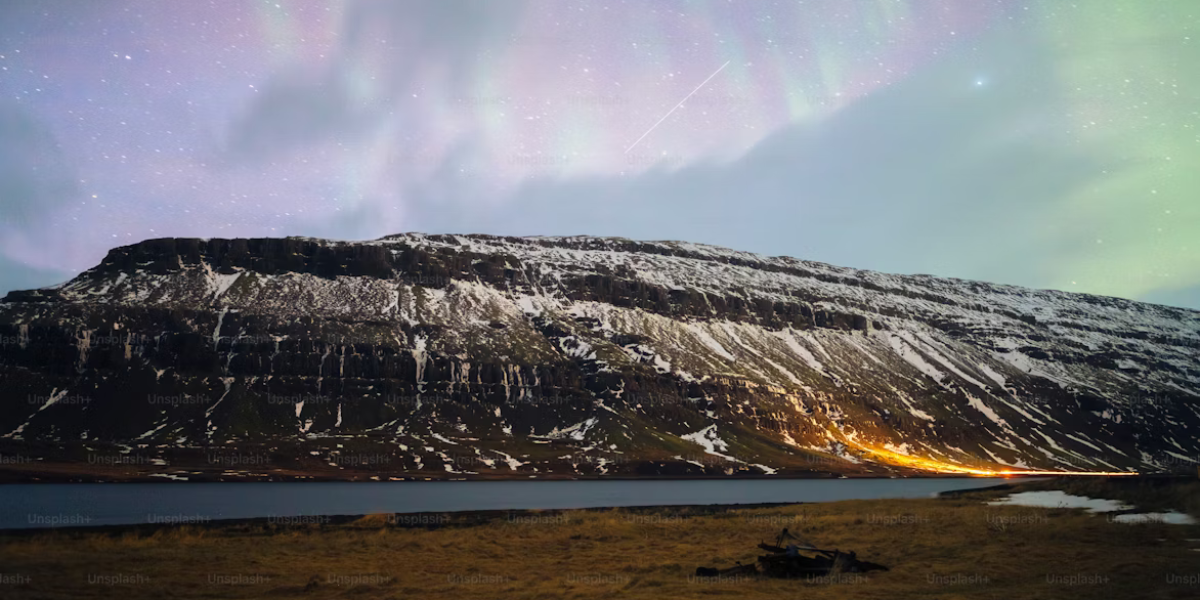
A rare celestial event is capturing the attention of skywatchers across the northern United States this weekend, as a geomagnetic storm triggered by heightened solar activity is expected to produce visible auroras, commonly known as the Northern Lights, across multiple states. Scientists monitoring space weather say the phenomenon may be visible from March 6 through March 8, giving residents and astronomy enthusiasts an uncommon opportunity to observe the colorful night sky display without traveling far north.
The Northern Lights occur when charged particles emitted by the Sun collide with gases in Earth’s upper atmosphere. These interactions create waves of light that appear in a variety of colors, including green, pink, purple, and red. While auroras are typically visible in high-latitude regions such as Alaska and northern Canada, stronger geomagnetic activity can push the phenomenon farther south, allowing more people to experience the event.
The current display is being driven by a high-speed solar wind stream originating from a coronal hole on the Sun’s surface. Coronal holes are areas where the Sun’s magnetic field opens outward into space, allowing solar particles to escape at high velocity. When these particles reach Earth and interact with the planet’s magnetic field, they can trigger geomagnetic storms that enhance auroral activity.
Scientists monitoring space weather have classified the current event as a minor to moderate geomagnetic storm. Even at this level, auroras can extend across large portions of the northern United States when conditions align correctly. Regions expected to have the highest chance of visibility include Alaska, Washington, Idaho, Montana, North Dakota, South Dakota, Minnesota, Wisconsin, Michigan, and Maine. In some cases, observers in northern sections of states such as Oregon, Illinois, Ohio, and New York may also see faint auroral displays near the horizon if activity intensifies.
Experts say the best viewing hours are typically between 10:00 p.m. and 2:00 a.m. local time, when the sky is darkest and geomagnetic activity often peaks. Those hoping to witness the event are encouraged to move away from city lights and find locations with a clear view of the northern horizon. Light pollution from urban areas can significantly reduce visibility, making rural or open landscapes ideal for viewing.
March is historically considered a favorable month for aurora observation due to a scientific phenomenon related to Earth’s magnetic field alignment. Around the time of the spring equinox, the interaction between Earth’s magnetic field and the solar wind can become more efficient, increasing the likelihood of geomagnetic disturbances. As a result, auroral displays often become more frequent or more visible during this period.
For many observers, photographing the Northern Lights adds another level of excitement to the experience. Modern cameras and smartphones equipped with night-mode capabilities can capture the display even when it appears faint to the naked eye. Photographers often recommend using a tripod, wide-angle lens, and longer exposure settings to capture the vivid colors and motion of the aurora. Shooting multiple exposures can help highlight details that may otherwise be difficult to see.
However, weather conditions will play a significant role in determining how widely the lights can be seen. Clear skies are essential for observing auroras, and cloud cover can obscure the display entirely even during strong geomagnetic activity. In addition, a bright moon can slightly reduce contrast in the night sky, though auroras can still remain visible during intense bursts of activity.
The increased solar activity responsible for this event is also connected to the Sun’s natural cycle. The Sun follows an approximately 11-year cycle marked by periods of rising and falling activity. During the most active phase, known as solar maximum, the Sun produces more sunspots, solar flares, and energetic particle emissions. Scientists believe the Sun is currently approaching a more active stage in its cycle, which could lead to more frequent auroral displays over the coming years.
Beyond the visual spectacle, events like this highlight the powerful interactions between the Sun and Earth’s magnetic environment. While stronger geomagnetic storms can sometimes interfere with satellites, navigation systems, or power grids, the current event is considered relatively mild and is expected to pose little risk to technological infrastructure.
For many residents across northern states, the coming nights may offer a rare chance to witness one of nature’s most captivating natural light shows. The appearance of the Northern Lights serves as both a scientific reminder of solar activity and a moment of wonder for those fortunate enough to see the sky illuminated with shifting waves of color.