
NASA's Swift Space Telescope Nears Fiery Return To Earth After Nearly 22 Years In Space
By Renee Baptiste |
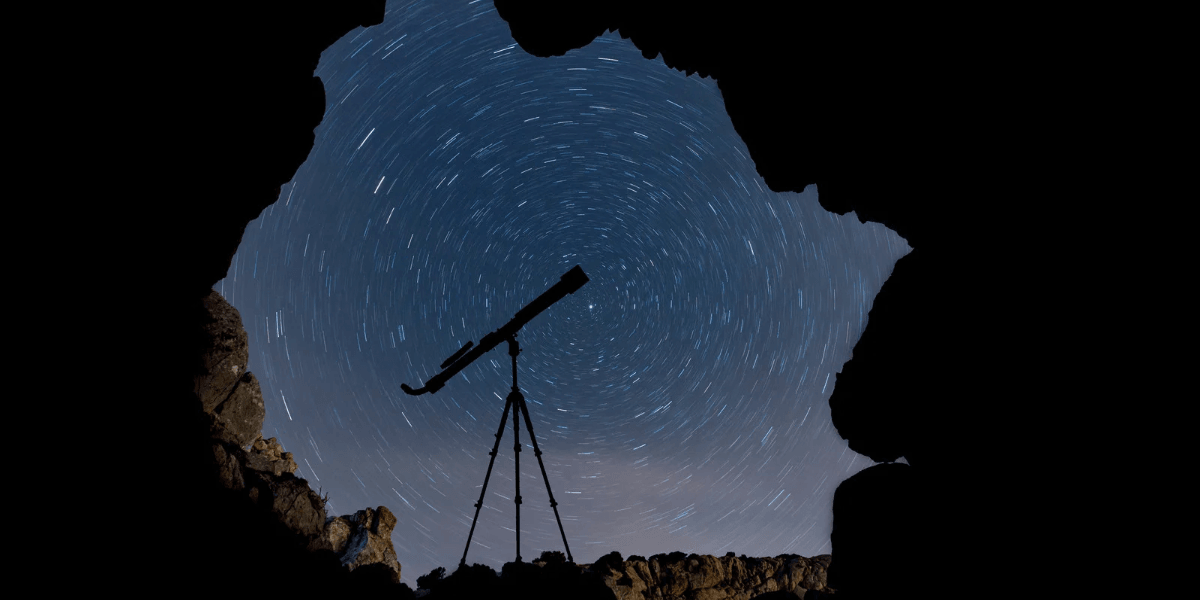
NASA's Swift Observatory approaches its final descent after nearly 22 years of groundbreaking discoveries and an unsuccessful rescue attempt.
A spacecraft that spent nearly 22 years watching the universe's most powerful explosions is approaching its own dramatic ending. On November 3, 2026, NASA's Neil Gehrels Swift Observatory was descending toward Earth, with atmospheric reentry expected within hours. The event marks the final chapter of an extraordinary scientific mission that lasted more than ten times longer than originally planned. Although engineers attempted to extend the telescope's life, the aging observatory could no longer maintain its orbit. Its approaching return has drawn attention to both its scientific achievements and the challenges of maintaining spacecraft in an increasingly active orbital environment.
NASA's Swift Observatory Faces Its Final Descent
According to a November 2 announcement from NASA, the approximately 3,200 pound spacecraft was expected to reenter Earth's atmosphere around 3:30 a.m. Eastern Standard Time on November 4, with an uncertainty of 11 hours.
That uncertainty meant reentry could occur as early as November 3. NASA and the United States Space Force continued monitoring the spacecraft as its altitude declined.
Scientists expected most of the observatory to burn up during its passage through the atmosphere. However, NASA acknowledged that some components could survive and reach Earth's surface.
The agency estimated the probability of harm to anyone on Earth at approximately one in 2,100. Because of the spacecraft's orbital inclination, potential surviving fragments would be limited to locations between 20.6 degrees north and 20.6 degrees south latitude.
The exact reentry time and location remained uncertain as of November 3.
A Two Year Mission That Transformed Space Science
Launched on November 20, 2004, Swift was originally designed for a two year mission studying gamma ray bursts, brief flashes of extremely energetic radiation produced by some of the universe's most violent events.
Its three instruments allowed scientists to observe these explosions across different wavelengths of light. Swift could identify an event, determine its location, and rapidly redirect its telescopes to investigate the fading aftermath.
This capability helped astronomers coordinate observations with other telescopes around the world.
Over nearly 22 years, Swift observed more than 2,000 gamma ray bursts and studied more than 1,400 supernova explosions. Its observations contributed to approximately 7,000 scientific papers.
The observatory also investigated black holes, distant galaxies, comets, and asteroids, expanding its scientific value far beyond its original mission.
Its remarkable longevity demonstrated how carefully designed scientific instruments can continue producing valuable discoveries long after their original operating periods.
Why NASA Could Not Prevent Swift's Return
Swift's decline accelerated because of atmospheric drag, a force affecting spacecraft even hundreds of miles above Earth.
Solar activity heats Earth's upper atmosphere, causing it to expand. This expansion increases resistance against satellites in low Earth orbit, gradually reducing their speed and altitude.
NASA attempted to prevent Swift's premature descent through an ambitious spacecraft servicing mission.
A commercial vehicle developed by Katalyst Space Technologies launched in July 2026 with plans to approach Swift, capture it, and raise its orbit.
However, technical problems prevented the operation from succeeding. NASA ended the attempted rescue in August.
The agency nevertheless identified valuable lessons from the effort, particularly for future missions involving robotic spacecraft servicing and orbital maintenance.
The Final Days Of A Remarkable Observatory
On October 20, Swift reached an altitude of approximately 171 miles above Earth's surface.
At that height, atmospheric resistance made stable scientific observations impossible. The spacecraft entered safe mode, and mission controllers at Pennsylvania State University subsequently sent commands ending its operations.
Swift's final observations concluded a mission that had helped scientists study some of the universe's most distant and energetic phenomena.
Although the telescope will no longer collect new information, its extensive scientific archive remains available for researchers.
Future studies may continue drawing discoveries from the observations Swift accumulated during its decades in orbit.
What Swift's Return Means For Future Space Missions
Swift's approaching reentry highlights an important challenge facing space agencies: scientific spacecraft can remain productive long after their original design lifetimes, but their continued operation depends on orbital conditions and engineering limitations.
The unsuccessful rescue attempt also illustrates the difficulty of developing reliable technology to maintain or reposition satellites already in space.
For researchers, Swift leaves a substantial collection of astronomical observations. For spacecraft engineers, its final months offer practical lessons about atmospheric drag, mission planning, and satellite servicing.
For the public, the event provides a reminder that space exploration involves not only launching new missions but also responsibly managing spacecraft at the end of their operational lives.
A Lasting Legacy For American Space Exploration
As Swift approaches its final descent, its achievements remain an important part of modern astronomical research. The mission expanded scientific understanding of gamma ray bursts, supernovae, black holes, and other powerful cosmic events.
Its longevity also demonstrated the value of sustained investment in scientific instruments capable of adapting to new research opportunities.
Swift's final descent closes a remarkable chapter in American space exploration. Its instruments may soon disappear into Earth's atmosphere, but the scientific knowledge gathered during nearly 22 years of observations will continue supporting astronomical research for years to come.

PrimeTime Press Contributor
Renee Baptiste
Covers health, technology, and entertainment, and how each shapes the way audiences live and spend their time.
This article features partner, contributor, or branded content from a third party. Members of the PrimeTime Press editorial staff were not involved in the creation of this content. All views and opinions are those of the contributor alone.