
August 12, 2026 Solar Eclipse Brings a Rare Celestial Event to Parts of the United States
By Dominic Chase |
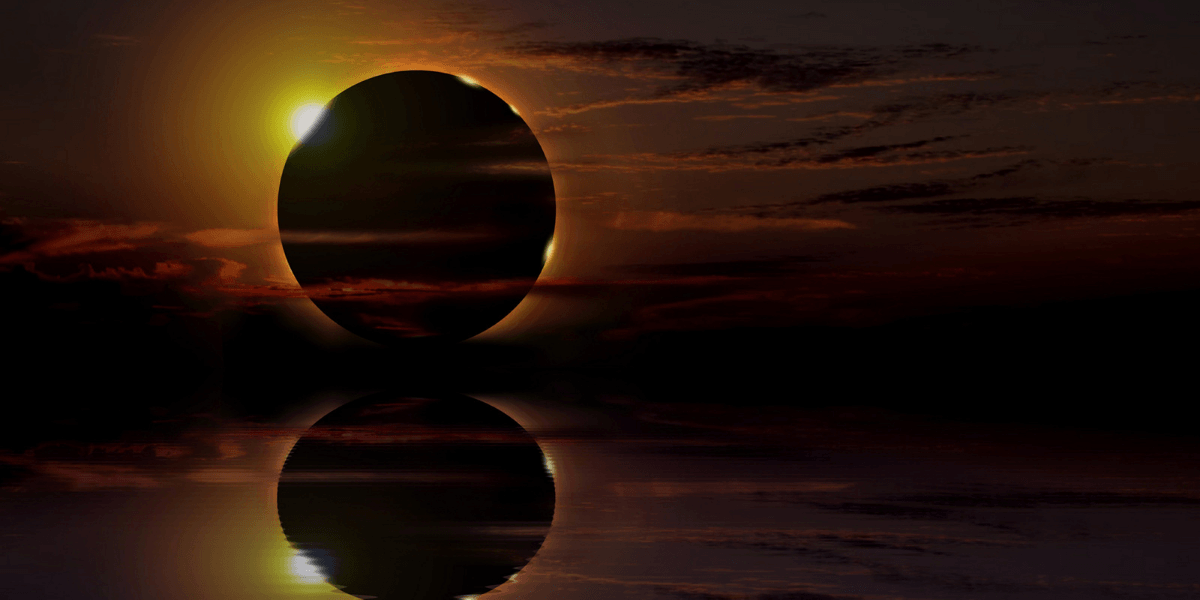
A major celestial event unfolded on Wednesday, August 12, 2026, as a total solar eclipse crossed parts of the Northern Hemisphere and brought a partial eclipse to sections of the United States. While the United States was not within the path of totality, residents in parts of Alaska and the northern and eastern portions of the country had an opportunity to see the Moon pass across the face of the Sun.
The eclipse was one of the most notable astronomical events of 2026. A total solar eclipse occurred along a narrow path stretching through Greenland, Iceland, northern Russia, the Atlantic Ocean, Spain and a small part of Portugal. Outside that path, observers in a much wider area experienced a partial solar eclipse. In the United States, the partial eclipse was visible from parts of Alaska through sections of the northern and eastern mainland.
A solar eclipse occurs when the Moon moves between Earth and the Sun and temporarily blocks some or all of the Sun’s light. During a total eclipse, the Moon completely covers the visible surface of the Sun for observers located within the path of totality. During a partial eclipse, only part of the Sun is covered.
For American observers, the experience varied considerably depending on location. Anchorage, Alaska, saw approximately 28% of the Sun covered at the eclipse’s maximum, while Fairbanks experienced about 37% coverage. In the continental United States, the eclipse was more limited. Bangor, Maine, experienced approximately 24% coverage, while Boston saw about 16%. New York City experienced roughly 9% coverage, Philadelphia about 7%, and Washington, D.C., about 4%. Some locations farther west and south did not experience the eclipse at all.
The timing also varied by location. In Anchorage, the partial eclipse began at about 7:36 a.m. local time and reached its maximum around 8:21 a.m. In New York City, the eclipse began shortly after 1 p.m. and reached its maximum at approximately 1:54 p.m. The partial phase ended at different times depending on location.
Although the United States did not experience totality during this eclipse, the event remained scientifically significant. Solar eclipses provide researchers with opportunities to study the Sun and its outer atmosphere. During totality, the Sun’s corona becomes visible because the Moon blocks the much brighter solar disk. Researchers can use these brief periods to examine solar activity and improve understanding of the Sun’s behavior.
NASA also conducted scientific activities connected with the eclipse. The agency planned observations involving a high-altitude WB-57 research aircraft to study the Sun’s corona. NASA-supported teams also conducted atmospheric research using scientific balloons during the eclipse. These efforts demonstrate how eclipse events can serve not only as public astronomical spectacles but also as opportunities for scientific observation.
The eclipse also highlighted the importance of proper eye safety. Looking directly at the Sun during a partial solar eclipse can cause serious eye injury. Ordinary sunglasses do not provide adequate protection. Specialized solar-viewing glasses or approved solar viewers are required when observing the partially eclipsed Sun directly. NASA also recommends indirect viewing methods, such as a simple pinhole projector, for people without appropriate solar-viewing equipment.
The August 12 event was particularly notable because total solar eclipses are relatively rare at any individual location. The path of totality is narrow because the Moon’s darkest shadow covers only a limited portion of Earth’s surface. Even when a total eclipse occurs somewhere on Earth, most people outside that narrow path see only a partial eclipse or no eclipse at all.
For people across the United States, the event offered an opportunity to observe the mechanics of the Earth-Moon-Sun system without the need for specialized scientific equipment. Even a modest partial eclipse can make the Moon’s movement across the Sun visible and provide an accessible introduction to observational astronomy.
The August 12, 2026, eclipse therefore stood out as both a public skywatching event and a scientific opportunity. While totality was reserved for locations outside the United States, portions of the country experienced a noticeable partial eclipse, with the greatest coverage occurring in parts of Alaska and the Northeast.
The event also served as a reminder that astronomical events can be observed safely and meaningfully when proper precautions are followed. For skywatchers, educators and astronomy enthusiasts, the eclipse provided another opportunity to observe a rare alignment of the Sun, Moon and Earth and to better understand the celestial movements that produce these dramatic events.

PrimeTime Press Contributor
Dominic Chase
Covers breaking news and sport, following stories as they develop and the people at the centre of them.
This article features partner, contributor, or branded content from a third party. Members of the PrimeTime Press editorial staff were not involved in the creation of this content. All views and opinions are those of the contributor alone.