
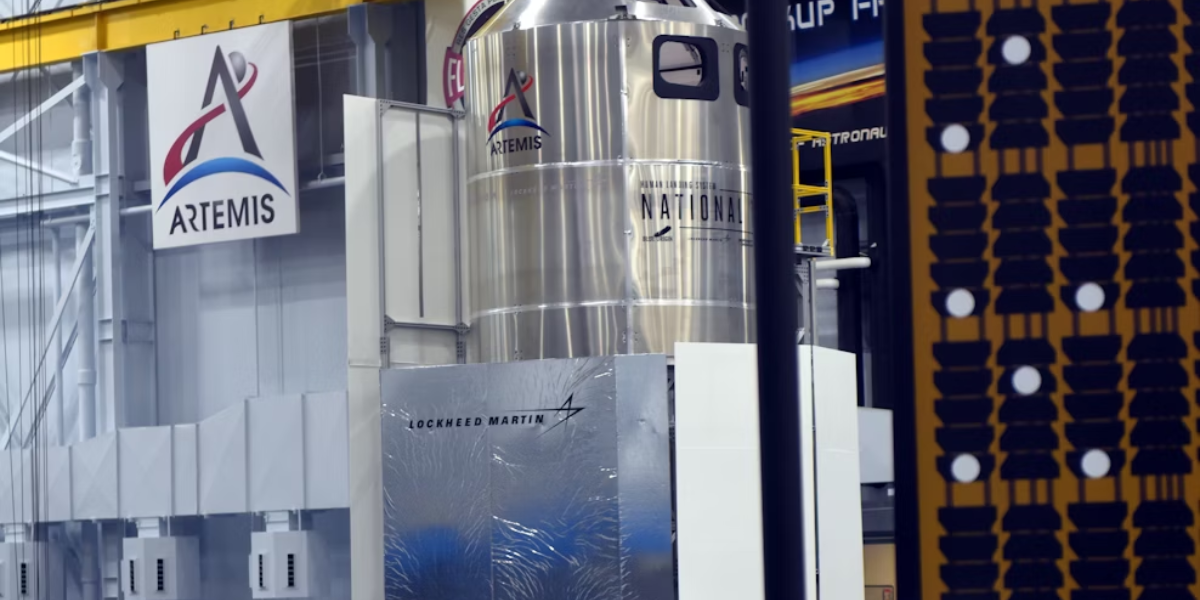
On April 8, 2026, NASA introduced a next-generation lunar habitat prototype designed to support sustained human presence on the Moon, marking a significant milestone in the agency’s long-term space exploration strategy. The unveiling took place at NASA’s Johnson Space Center in Houston and showcased a fully integrated system intended for use in upcoming Artemis missions.
The prototype, known as the Lunar Surface Habitat (LSH), is engineered to house astronauts for extended stays on the Moon, with capabilities that go beyond earlier short-duration mission modules. The structure incorporates advanced life-support systems, radiation shielding, and modular expansion features, reflecting years of research and collaboration between NASA and private aerospace partners.
A New Era of Lunar Living
The Lunar Surface Habitat represents a shift from exploration to habitation. Unlike the temporary modules used during earlier lunar missions, the LSH is designed for missions lasting weeks to months. It includes sleeping quarters, a laboratory for scientific experiments, and a dedicated area for exercise and mental wellness, recognizing the physical and psychological challenges of long-duration space missions.
NASA officials emphasized that the habitat is a critical component of the broader Artemis program, which aims to establish a sustainable human presence on the Moon. The program builds on earlier efforts such as Artemis II, which focuses on sending astronauts around the Moon, paving the way for future surface operations.
Technological Innovations and Safety Features
One of the most notable aspects of the LSH is its advanced environmental control system. This system recycles air and water with high efficiency, reducing the need for frequent resupply missions from Earth. The habitat also uses smart sensors to monitor internal conditions in real time, allowing astronauts and mission control teams to quickly respond to any anomalies.
Radiation protection remains a major concern for lunar missions. To address this, the habitat incorporates layered shielding materials and is designed to be partially covered with lunar surface material to provide additional protection against cosmic radiation and solar flares.
Energy efficiency is another key feature. The habitat is powered by a combination of solar panels and energy storage systems that ensure continuous operation during the Moon’s long nights, which can last up to 14 Earth days. This hybrid approach aims to provide reliable power while minimizing logistical challenges.
Collaboration with Industry Partners
NASA’s approach to developing the Lunar Surface Habitat highlights the growing role of private industry in space exploration. Several aerospace companies contributed to the design, manufacturing, and testing of various components, including structural materials and autonomous systems.
This collaborative model allows NASA to leverage commercial innovation while maintaining rigorous safety and performance standards. It also reflects a broader trend in the space sector, where public-private partnerships are accelerating the pace of technological advancement.
Scientific and Economic Implications
The introduction of a long-duration lunar habitat opens new possibilities for scientific research. Astronauts will be able to conduct more complex experiments, including studies on lunar geology, resource utilization, and the effects of low gravity on human health.
These findings are expected to inform future missions to Mars and beyond. By testing technologies and operational strategies on the Moon, NASA aims to reduce risks associated with deeper space exploration.
The habitat also has potential economic implications. As interest in lunar resources grows, including water ice and rare minerals, a sustained human presence could support the development of a lunar economy. While such prospects remain in early stages, the infrastructure provided by the LSH is a foundational step.
Preparing for Future Missions
NASA officials indicated that the Lunar Surface Habitat will undergo extensive testing over the next year, including simulations and analog missions on Earth. These tests are designed to validate the habitat’s performance under conditions that closely mimic the lunar environment.
If successful, the habitat could be deployed as part of a future Artemis surface mission later this decade. Its modular design allows for incremental upgrades, ensuring that it can evolve alongside new technologies and mission requirements.
Key Takeaways
The unveiling of NASA’s Lunar Surface Habitat prototype signals a major advancement in human space exploration. It reflects a transition from short-term missions to long-term habitation, supported by cutting-edge technology and collaborative innovation.
For readers, the development underscores the rapid progress being made in space science and engineering. It also highlights the broader impact of such advancements, from scientific discovery to potential economic opportunities.
As NASA continues to refine its plans, the Lunar Surface Habitat stands as a tangible step toward a future where humans live and work beyond Earth, turning ambitious visions of space exploration into practical reality.