
NASA Announces Coverage for Astronaut Anil Menon’s Launch to the International Space Station
By Renee Baptiste |
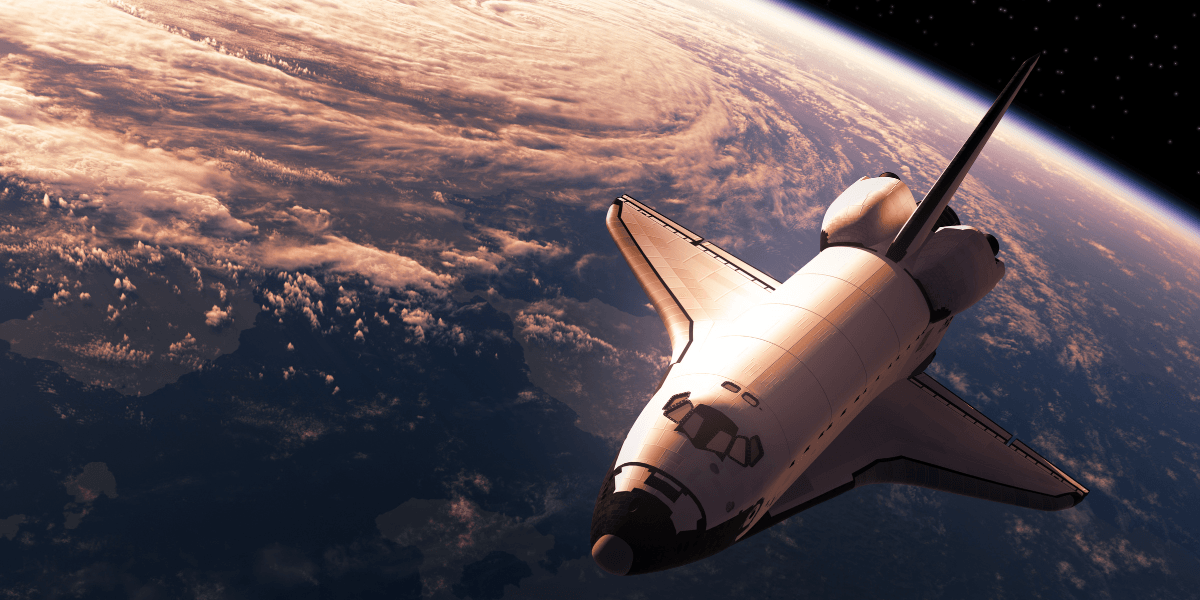
NASA announced on July 9, 2026, that it will provide comprehensive coverage of the upcoming launch of astronaut Anil Menon to the International Space Station (ISS), marking another significant milestone in the agency’s ongoing efforts to support long-duration scientific research and international collaboration in low Earth orbit. The announcement offers the public an early look at one of NASA’s next crewed spaceflight missions while highlighting the continued importance of the ISS as a platform for scientific discovery.
According to NASA, Menon will launch aboard a Roscosmos Soyuz spacecraft as part of an international expedition to the orbiting laboratory. The mission represents another chapter in the long-standing partnership between NASA and its international counterparts, demonstrating how multiple space agencies continue to work together despite the technical and logistical challenges of human spaceflight.
Anil Menon brings an extensive and diverse background to the mission. Before joining NASA’s astronaut corps, he worked as an emergency medicine physician and aerospace medical expert. He also served as a flight surgeon supporting human spaceflight operations, contributing to astronaut health and mission planning. His medical expertise, combined with years of operational experience, makes him well suited for the demanding environment aboard the International Space Station.
NASA’s announcement outlined plans for live coverage leading up to launch, including mission briefings, crew activities, and the launch itself. The agency also plans to provide updates throughout the mission as the crew conducts scientific experiments and station maintenance activities. Public broadcasts of major milestones have become a hallmark of NASA’s outreach efforts, allowing audiences around the world to follow human spaceflight missions in real time.
The International Space Station has remained continuously occupied for more than two decades, serving as one of humanity’s most successful examples of international scientific cooperation. Orbiting approximately 250 miles (400 kilometers) above Earth, the station functions as a unique laboratory where researchers can perform experiments that are impossible under Earth’s gravity.
During his stay aboard the ISS, Menon is expected to participate in a broad range of scientific investigations spanning biology, medicine, materials science, Earth observation, and technology development. Many of these experiments aim to improve understanding of how living organisms respond to long-duration spaceflight while also producing knowledge that can benefit people on Earth.
Medical research continues to be one of the station’s most valuable contributions. Scientists study how microgravity affects the human body, including changes to muscles, bones, the cardiovascular system, and the immune system. Findings from these investigations help NASA prepare astronauts for future missions to the Moon and Mars while also contributing to advances in healthcare and rehabilitation on Earth.
Technology demonstrations also remain a central focus aboard the station. Engineers routinely test new equipment, autonomous systems, communications technologies, and life-support hardware in the challenging conditions of space before considering their use on future deep-space missions. These demonstrations reduce technical risks and improve the reliability of systems designed for exploration beyond low Earth orbit.
The upcoming mission also reinforces the importance of international partnerships in space exploration. The International Space Station is jointly operated by NASA, Roscosmos, the European Space Agency, the Japan Aerospace Exploration Agency, and the Canadian Space Agency. Through this collaboration, participating nations share scientific expertise, operational responsibilities, and research opportunities that would be difficult for any single organization to achieve independently.
NASA noted that astronaut assignments are carefully planned years in advance to ensure crews possess complementary technical and scientific skills. In addition to conducting research, astronauts perform routine maintenance, install new equipment, monitor station systems, and occasionally participate in spacewalks when external repairs or upgrades are required.
The agency emphasized that missions such as Menon’s help prepare for future exploration goals under the Artemis program and other long-term initiatives. Lessons learned from living and working aboard the International Space Station continue to shape the design of spacecraft, habitats, and operational procedures that may one day support human missions deeper into the solar system.
Beyond its scientific value, the ISS remains an important educational platform. NASA regularly shares mission updates, educational resources, and live events with schools and the general public, encouraging interest in science, technology, engineering, and mathematics (STEM). Public engagement surrounding astronaut launches often inspires students to pursue careers in research, engineering, medicine, and aerospace.
NASA’s July 9 announcement serves as an important milestone ahead of the mission, giving researchers, educators, and space enthusiasts an opportunity to follow preparations before launch. As Anil Menon prepares to begin his first mission aboard the International Space Station, the expedition will contribute to the station’s long tradition of advancing scientific knowledge while strengthening international cooperation in human spaceflight.
With the International Space Station expected to remain an active center for research throughout the coming years, missions like this continue to expand understanding of both life in space and technologies that may support humanity’s future exploration beyond Earth orbit.

PrimeTime Press Contributor
Renee Baptiste
Covers health, technology, and entertainment, and how each shapes the way audiences live and spend their time.
This article features partner, contributor, or branded content from a third party. Members of the PrimeTime Press editorial staff were not involved in the creation of this content. All views and opinions are those of the contributor alone.